Beta to Production in Under Twelve Weeks — on AWS Serverless
Stryde set out to build a connected fitness bike that gave customers real choice — workouts, instructors, and modes — without the walled-garden experience. They had the hardware team. They needed a software partner who could go from beta to production in under twelve weeks. We did, on AWS serverless.
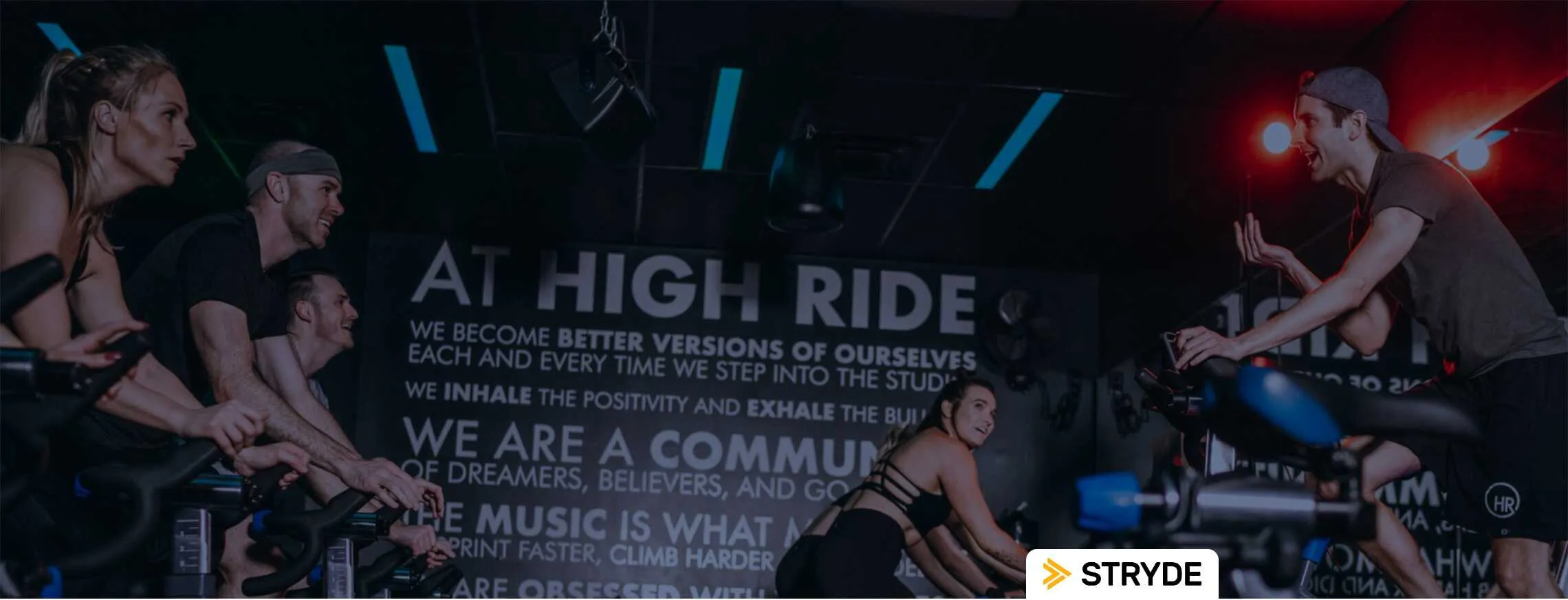
An Open-Ecosystem Bike in a Walled-Garden Market
Stryde’s customer wanted it all — a wide range of workouts, their pick of instructors and instruction styles, competitive and non-competitive modes. The market around them was full of single-use, walled-garden subscriptions. Stryde was positioned to be the opposite: an open platform that let customers design their own fitness experience inclusively and affordably.
They had the team to build the hardware. A German industrial designer was leading the sensor-laden bike. A separate engineering team owned the large-screen Android companion tablet. What they didn’t have was the software partner who could bridge those two and ship a product to customers quickly.
MVP Program, Then a Clean Handoff
We brought our START™ MVP program to the engagement: a step-by-step path from ideation to launch, built around the essential questions and the cloud-native choices that make scaling later cheaper than rebuilding.
The structure ran in eight two-week sprints. Sprint 0 covered prep — discovery, design, architecture, environment setup. Sprints 1 through 6 built features in iterations, with working demos at the end of each and client sign-off on what shipped. Sprint 7 was the deployment sprint.
The other half of the engagement, which doesn’t always get talked about, was the handoff. Stryde’s plan was to build an internal product, design, and engineering team over time. We helped them recruit those hires and transitioned code, notes, and process to the internal team cleanly. When the handoff was done, Stryde was running the platform themselves.
Bike, Tablet, Web, Commerce — One Stack, Every Surface
MVP feature design. We worked with Stryde to identify the minimum set of features a first customer would expect — and the minimum that would let the team learn fast after launch.
Customer onboarding and commerce. We built a marketing site to showcase the bike and integrated Shopify for payments, e-commerce, and fulfillment. A customer account profile tied purchase identity to the fitness experience so customers didn’t have to sign in twice for the product they’d already bought.
First-time tablet experience. On the bike itself, customers logged in with the same credentials they’d used to buy. The app opened to real-time workout telemetry — distance, RPM, torque — alongside a progress meter, a leaderboard, and gamified elements to keep riders engaged. A post-workout survey captured feedback. The tablet ran Stryde’s app and, by design, other approved apps customers expected on a modern tablet — Netflix, browser-based streaming — so the product didn’t feel locked in.
Backend services. Purpose-built, scalable, serverless. A CMS for content, customer tracking, analytics, and performance tuning.
Clean execution across the stack. React Native for the tablet app. React for the customer web portal and the admin/CRM portal. Serverless AWS-native backend. Eight sprints of iterative design, clickable mockups, client sign-off, and thorough user testing before each build — a rhythm that kept surprises out of the pipeline.
Nerd Talk: Serverless AWS Stack
The backend was AWS serverless end-to-end:
- Amazon Cognito for user management (free tier covered the first 50k users).
- API Gateway for scaled, authenticated API exposure.
- AWS Lambda for compute — pay per invocation, no idle cost, millions of requests per month covered by the free tier at launch scale.
- Amazon DynamoDB as the operational datastore — low operational overhead, good scaling characteristics.
- Amazon CloudSearch for full-text search across classes and content.
- Amazon SQS for messaging between services.
- Amazon S3 + CloudFront for static assets and video delivery.
- Amazon SES for transactional email.
Shopify handled the storefront; Stripe processed payments. Google Analytics tracked video engagement (start/stop granularity).
The cost shape was intentional. At launch-scale, the serverless stack costs almost nothing when idle and scales with usage — which matters a lot for a new consumer product where usage is unpredictable. The same stack was designed to absorb growth without a re-architecture.
Outsold the Initial Run, Then Handed to the Team Stryde Built
Beta to production, no backend rework. The serverless architecture carried the product from beta into full production without changes to the backend. What was built to launch was what ran.
Sold out on launch. Stryde outsold its initial production run on launch, with an aggressive growth trajectory into the following year.
A clean handoff. Our post-launch role was intentionally minimal. We helped Stryde recruit an internal product, design, and engineering team, and transitioned code, notes, and process to them. Today, they’re running the platform on their own — positioned for both independence and success.

Katana Fitness Inc.
Wellness and Fitness Services
Stryde is a connected-fitness company building a premium at-home indoor bike. The bike pairs with an onboard Android tablet and a subscription platform for classes, telemetry, and community features — with the flexibility to run other streaming apps alongside Stryde's own content.
Key Results
Facing a similar challenge?
Let's discuss how we can help your organization achieve the same results.